
All about the sports season
2026–2027: How betting affiliates can prepare for the upcoming sports calendar
Study the material, sign up via the main menu, and start working with Q3.network.
The next big sports cycle brings together many of the world’s biggest events in one continuous run. To help affiliates plan ahead, the Q3.network team has put together a report covering the major events. World Cups, league finals, and continental tournaments are set to unfold back to back, giving affiliates a steady stream of high-traffic opportunities. Below is an overview of the tournaments likely to shape the market over the next two years.
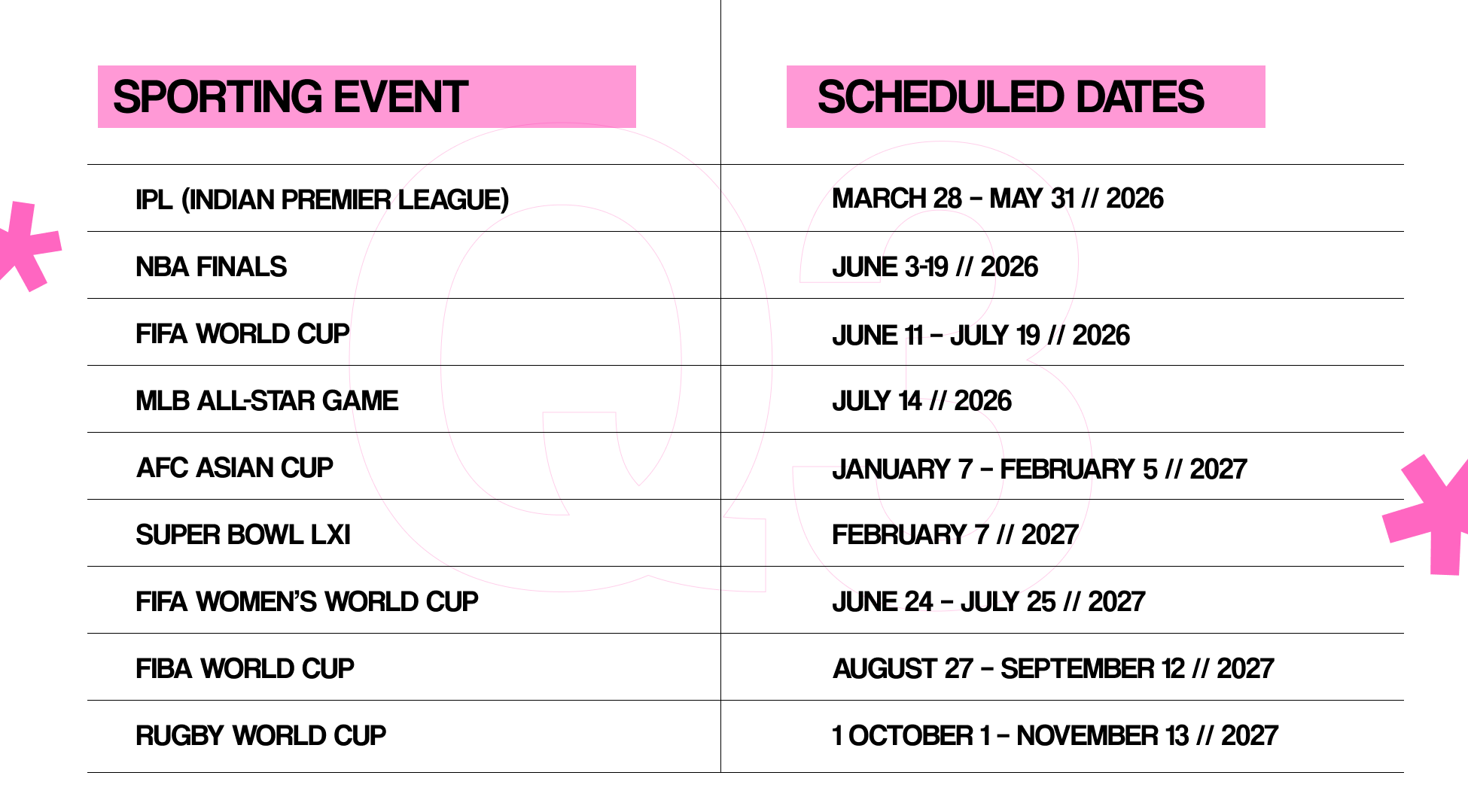
The 2026–2027 roadmap
Throughout the spring and summer of 2026, the market will be shaped by a continuous flow of high-impact sporting events, ranging from IPL and the NBA Finals to the FIFA World Cup. Immediately afterward, audience attention will be sustained by major regional events such as the MLB All-Star Game.
As we move into 2027, the geographical focus shifts. While the World Cup sets the initial momentum, attention gradually transitions toward Asia and South America, driven by international basketball and rugby tournaments. The key takeaway is that audience engagement does not decline after a major event — it simply shifts across regions and disciplines.
What this means for affiliates?
A cycle of this scale requires a different approach to traffic management.
Rather than relying on isolated campaigns, it becomes more effective to build a structured roadmap aligned with each major event. Success depends on planning activity around the calendar instead of reacting to individual peaks.
At the same time, major tournaments generate sustained interest long before the final match. Draws, roster announcements, injuries, expert predictions, and local storylines all contribute to a prolonged buildup of attention.
The scale of these events also matters. FIFA World Cup 2026 will feature 48 teams and a record 104 matches. The 2027 Women’s World Cup will be the first to take place in South America, while the FIBA World Cup will bring together 32 national teams.
Given this structure, performance is best approached in stages:
- pre-event preparation, including funnel setup and audience warm-up
- the active phase during group stages and early rounds
- peak periods such as playoffs and finals
- post-event retention
Geography is equally important. The same tournament performs differently across regions, which makes localization a key factor in both content and traffic strategy.
Read the guide, head to the main menu to register, and join Q3.network.
Major sporting events: overview
2026
IPL — until June 3
The leading cricket league in India, with a massive local audience. The primary GEOs are India and surrounding regions. Traffic remains consistent throughout the season, making it suitable for long-term campaigns with localized landing pages and tailored creatives.
NBA Finals — June 3–19
The championship series of one of the most popular basketball leagues globally. While interest in the NBA is strong throughout the season, the Finals attract peak attention. This event performs well across the US, Europe, and parts of Asia and can be leveraged both during the peak and in the lead-up phase.
FIFA World Cup — June 11 to July 19
The largest event in global sports, featuring 48 teams and 104 matches. It represents the core traffic driver for the sports vertical. Interest builds well in advance and remains high throughout the tournament. It performs across nearly all GEOs, including Europe, LATAM, Asia, and Africa, and supports multiple traffic sources such as SEO, Facebook, and in-app campaigns.MLB All-Star Game — July 14
A key event for the US market that helps sustain audience engagement following the World Cup. It serves as an effective retention point to keep traffic active after a major global event.
2027
AFC Asian Cup — January 7 to February 5
The main football tournament in Asia, with strong engagement in Southeast Asia and the Middle East. It is particularly suitable for localized traffic strategies and regional offers.
Super Bowl LXI — February 7, 2027
The NFL final and one of the most-watched sporting events worldwide. It generates a significant short-term spike in traffic and is well suited for fast launches and time-sensitive campaigns.
FIFA Women’s World Cup — June 24 to July 25
Hosted in Brazil, this tournament has been gaining traction, especially in Europe and LATAM. It is well suited for content-focused strategies and broader audience engagement.
FIBA Basketball World Cup — August 27 to September 12
An international tournament featuring national teams, with strong coverage across Europe, Asia, and parts of LATAM. It is suitable for global campaigns, particularly in regions with established basketball audiences.
Men’s Rugby World Cup — October 1–13
The main rugby tournament, particularly popular in Australia, the UK, France, and New Zealand. While more niche, it offers a stable and predictable traffic flow within specific GEOs.
How to use this in traffic planning?
Major sporting events continue to deliver record-breaking engagement. Super Bowl LX averaged 125.6 million viewers, making it one of the most-watched broadcasts in US history. The 2025 NBA Finals reached around 75 million viewers and generated over 5 billion social media views.
Beyond these figures lies a broader effect. Large-scale sporting events dominate the media landscape, driving high-intent audiences across news platforms, social media, and search.
Using this calendar as a framework allows for a more structured approach:
- starting early, before events begin
- maintaining engagement between tournaments
- shifting focus across GEOs as activity moves
- leveraging multiple sports within a continuous cycle
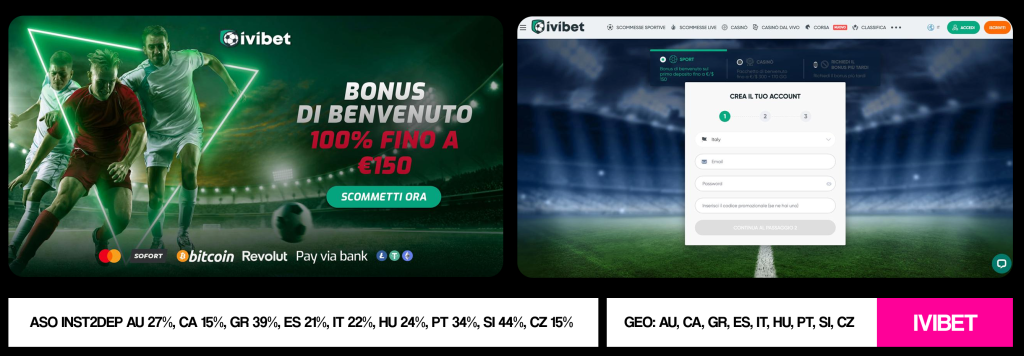
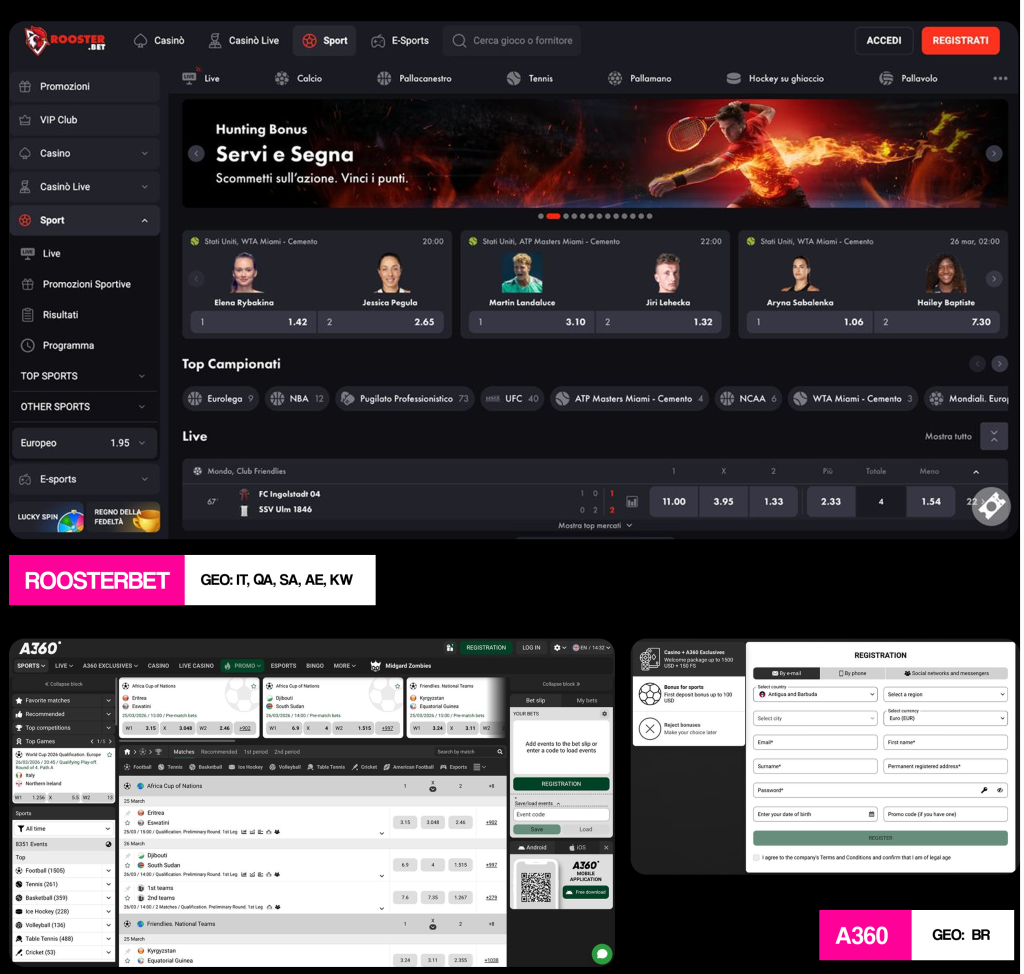
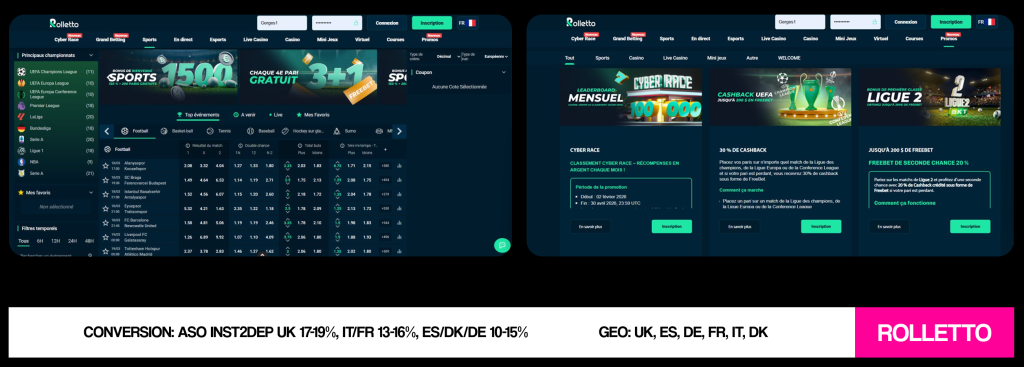
Q3.network offer selection for sports vertical
With such a dense schedule, choosing the right product becomes critical. At Q3.network, we focus on betting offers that demonstrate consistent performance and are well adapted to sports traffic.
Our evaluation is based on several factors, including the quality of the sportsbook product, availability of event-specific landing pages, bonus mechanics, and long-term retention potential. The offers highlighted below are optimized for European markets and Brazil.
Analyze the sports cycle, register via the main menu, and launch with Q3.network.
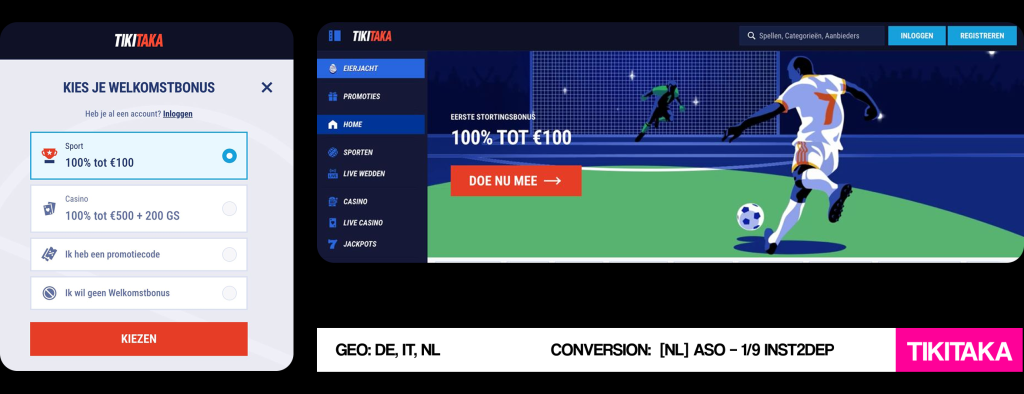
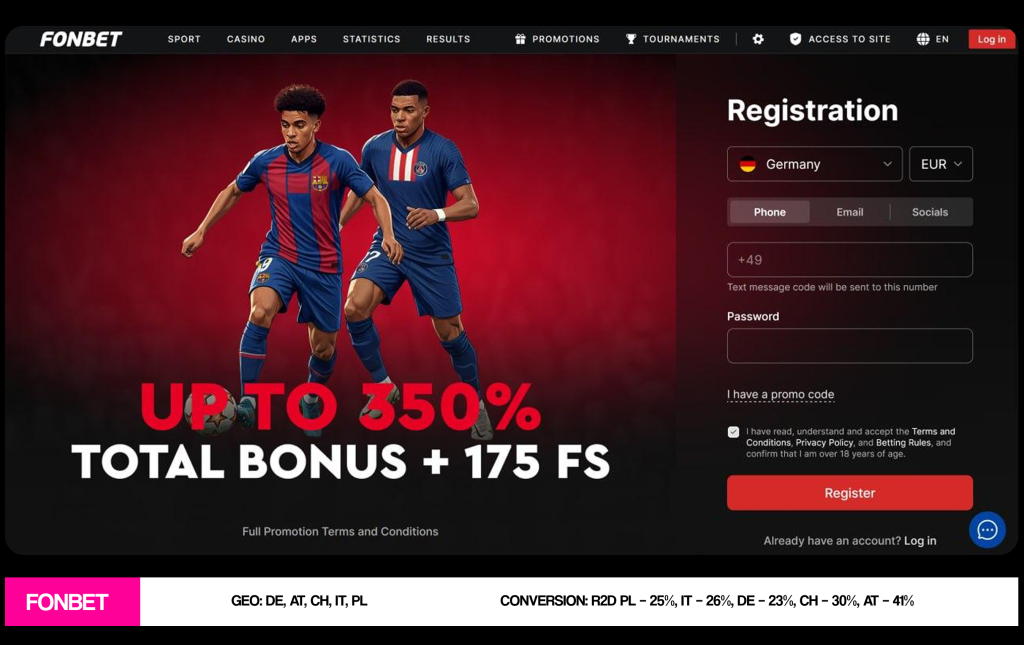
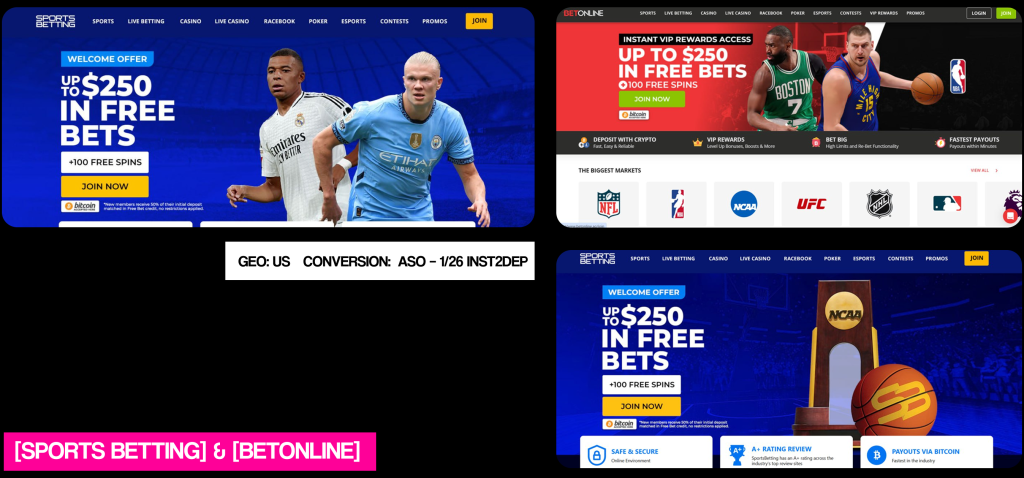
Succeeding in this cycle
In the current cycle, the strongest-performing products share two key characteristics:
- they are built specifically for sports
- they can quickly adapt to different events
Well-structured landing pages, clear bonus systems, and a defined conversion funnel are no longer optional. They form the baseline for effective performance.
These types of offers enable webmasters to move away from isolated campaigns and adopt a more systematic approach, scaling traffic steadily while maintaining audience engagement throughout the entire cycle.
Over the next two years, the betting industry will evolve through a continuous sequence of major sporting events rather than isolated peaks.
In this environment, success depends on working with the calendar, adapting to GEO-specific dynamics, and preparing infrastructure in advance. This approach allows not only capturing peak demand but also maintaining consistent performance across the entire sports cycle.